How to Choose a Sweet Watermelon: 7 Signs Before You Buy
7 practical signs to identify a sweet, ripe watermelon before you buy — no cutting required. Useful for both retail and wholesale buyers.

Introduction
Why Some Watermelons Are Bland Even Though They Look the Same
Ever bought a watermelon that looked perfect on the outside, but once cut open — bland, not sweet, pale flesh? That's not bad luck. There are physical signs you can check before buying, without cutting it open first.
This guide shares 7 practical signs to identify a sweet, ripe watermelon — whether you're buying one for home, or assessing a supply before ordering in bulk.
7 Signs of a Sweet Watermelon Before You Buy
1. A Yellow Spot on the Underside (Field Spot)
Every watermelon has one spot that touched the ground while growing — called the "field spot". This spot should be creamy yellow or golden yellow. If it's white or pale green, the watermelon was picked before it was fully ripe.
2. A Deep "Thud", Not a High-Pitched "Ting"
Tap the middle of the watermelon gently. A deep, resonant sound ("thud") indicates dense, juicy flesh — a good sign of ripeness. A hollow, high-pitched sound ("ting") usually means the watermelon is still underripe.
3. Weight Relative to Size
Pick it up and feel the weight. A good watermelon feels heavier than its size suggests — this points to high water content, a sign of freshness and ripeness.
4. A Symmetrical Shape, Not Lopsided
A watermelon with a balanced round or oval shape usually grew with a consistent, adequate water supply. A lopsided or irregular shape can sometimes indicate growth stress, which may affect flavour.
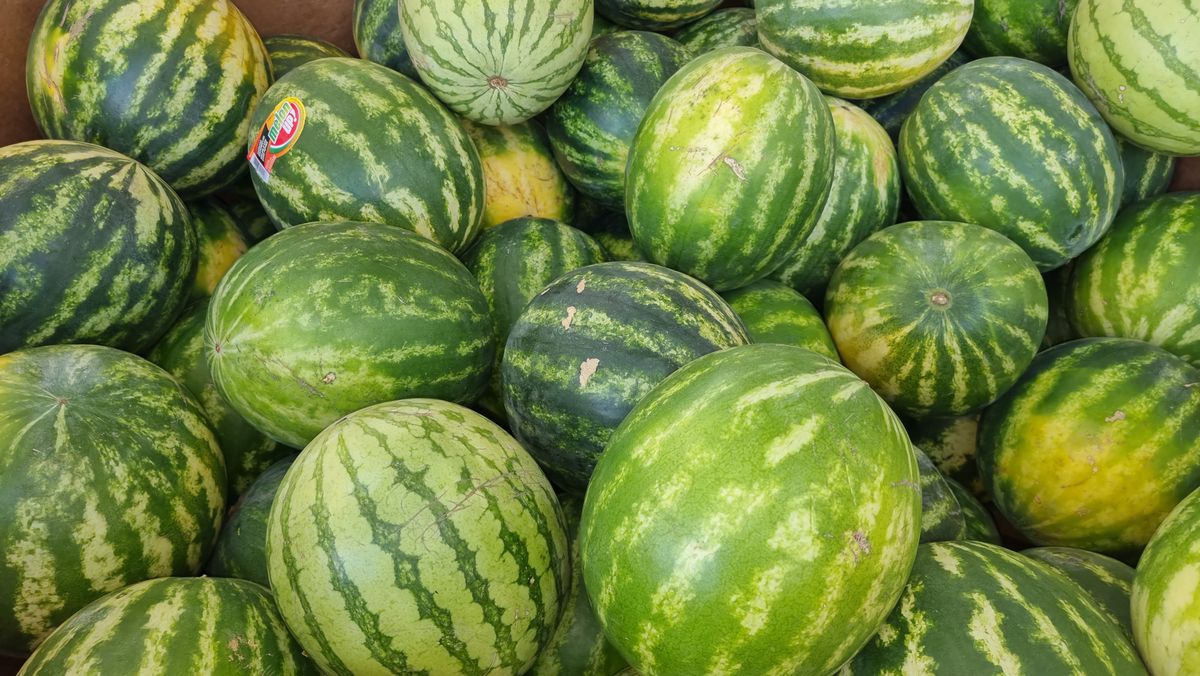
5. Clear, High-Contrast Stripes
A rind with clear, high-contrast dark and light stripes is usually a sign of a fully matured watermelon. Faded or unclear stripes sometimes indicate suboptimal growth.
6. A Dry Stem, Not Fresh Green
A stem that's already dried and brown suggests the watermelon was left to fully ripen on the vine before harvesting. A fresh green stem often means it was picked too early.
7. A Waxy, Not Glossy, Surface
A ripe watermelon usually has a natural waxy coating on the rind, appearing somewhat dull rather than shiny bright. A rind that's too glossy can sometimes indicate it's still underripe.

3 Common Mistakes When Choosing Watermelon
1. Judging by Rind Colour Alone
Dark or light green rind colour isn't a fully reliable indicator of ripeness on its own — it's more influenced by variety. Combine it with the other signs above for a more accurate assessment.
2. Being Swayed by Size Alone
A larger watermelon isn't necessarily sweeter than a medium one. Size is more related to variety and soil conditions than ripeness level.
3. Not Checking the Underside
Many people forget to check the field spot because it sits on the less visible underside. This is actually one of the most reliable indicators — don't skip this step.
Why This Matters Even More When Buying in Bulk
One Bland Watermelon Can Affect a Whole Lorry's Reputation
For fruit stalls, hotels or event organisers buying in large quantities, one or two underripe watermelons can disappoint customers or guests — even if the rest are excellent. That's why a consistent selection process matters in wholesale supply.
How We Handle This at Abang Tembikai
We check these ripeness signs during our selection process before delivery, so you don't have to worry about mixed quality within a single wholesale order. See our range of wholesale watermelon types — seeded red, seedless, and yellow — all go through the same checks.
FAQ
Does a heavier watermelon mean it's sweeter?
High weight relative to size indicates high water content, which usually correlates with freshness. It's not an absolute guarantee of sweetness, but it's one of the most reliable indicators when combined with the other signs.
Why does the field spot matter so much?
The field spot forms while the watermelon is still on the vine — a yellow colour shows it was left to mature long enough before harvest, rather than picked early for market.
Can I judge sweetness without cutting the watermelon open?
Yes, combining the 7 signs above — the tap sound, field spot, weight, and rind pattern — lets you make a fairly accurate assessment without cutting it open first.
Do yellow and red watermelon share the same ripeness signs?
Yes, these physical signs apply to both varieties. Read our yellow vs red watermelon comparison for the taste and use-case differences between the two.
Want Watermelon That's Already Checked for Ripeness?
We do this checking for you before delivery. Contact us for a wholesale supply that's consistently sweet and fresh.
Conclusion
Choosing a sweet watermelon isn't about luck — it's about checking the right signs: a yellow field spot, a deep tap sound, weight relative to size, a symmetrical shape, clear stripes, a dry stem, and a waxy surface. For bulk quantities, let us handle this selection so you get consistent supply every time. Also use our Bulk Watermelon Estimator to work out the quantity your event needs.